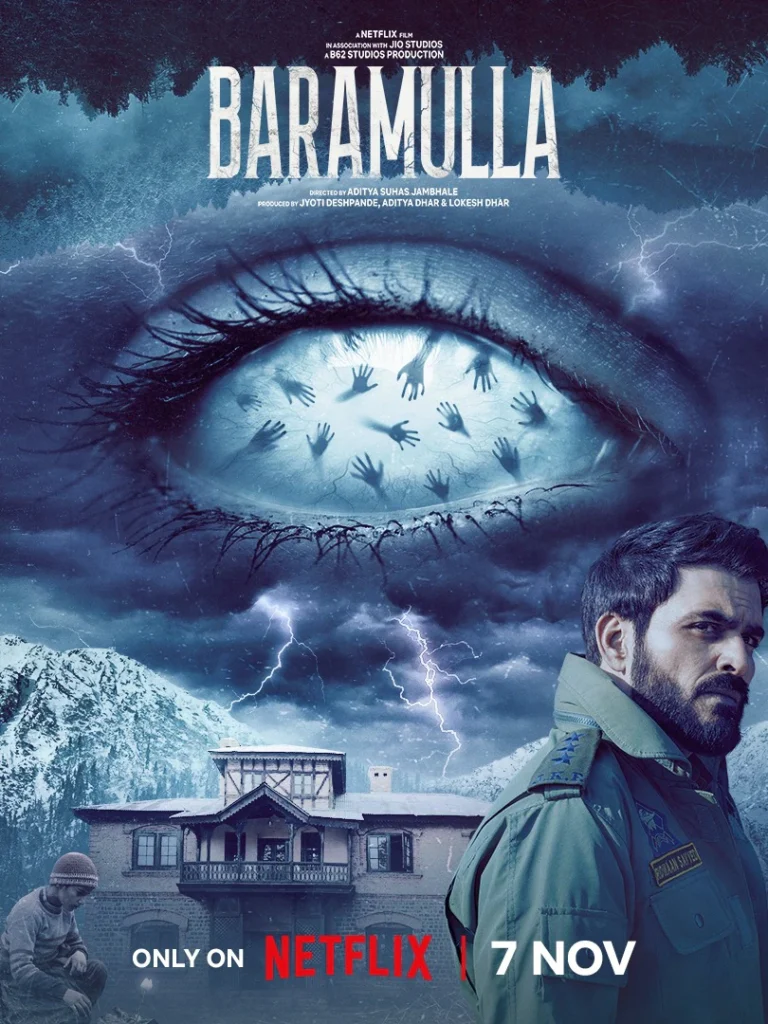
In the crisp chill of November 2025, Netflix dropped Baramulla, a Hindi supernatural horror thriller that weaves ghostly hauntings with the raw undercurrents of Kashmir’s unrest. Directed by Aditya Suhas Jambhale, this film grips you from the first snowy frame. It explores trauma, loss, and the blurred line between the earthly and the ethereal. Manav Kaul leads as a haunted cop, delivering a performance that lingers like fog over the Jhelum River. If you’re into atmospheric chillers like The Haunting of Hill House, this one might keep you up at night. Let’s dive into why Baramulla haunts more than it scares—and where it stumbles.
Movie Overview
| Aspect | Details |
|---|---|
| Full Movie Title | Baramulla |
| Release Date | November 7, 2025 (Netflix) |
| Language and Genre | Hindi; Supernatural Horror Thriller |
| Director | Aditya Suhas Jambhale |
| Producer | Aditya Dhar, Lokesh Dhar, Jyoti Deshpande |
| Production House | Jio Studios, B62 Studios |
| Running Time | 112 minutes |
| Budget | ₹4-5 crore (approx.) |
| Box Office Collection | N/A (Direct-to-Streaming) |
This lean budget delivers big on visuals, proving that smart storytelling trumps spectacle every time.
Cast and Crew
The ensemble shines in Baramulla, with each role adding layers to the film’s tense family dynamic and investigative web. Here’s a spotlight on the key players:
- Manav Kaul as DSP Ridwaan Shafi Sayyed: The tormented lead cop, whose quiet intensity anchors the chaos. Kaul’s subtle shifts from stoic investigator to unraveling father make him the film’s emotional core.
- Bhasha Sumbli as Gulnar Sayyed: Ridwaan’s wife, bringing warmth and quiet strength to the family’s fraying bonds. Her portrayal of maternal fear feels raw and real.
- Arista Mehta as Noorie Sayyed: The wide-eyed daughter sensing the unseen. Mehta’s debut is a revelation—her innocent terror steals scenes.
- Rohaan Singh as Ayaan: The young son, playful yet pivotal in the supernatural threads. Singh’s natural charm lightens heavier moments.
- Neelofar Hamid as Zainab: The school principal hiding secrets. Hamid adds sharp intrigue to the supporting cast.
- Ashwini Koul as Khalid: A shadowy militant figure, injecting menace with few words.
- Mir Sarwar as Ansari: A local ally turned suspect, delivering grounded tension.
- Sanjay Suri in a cameo as Sharad Sapru: A brief but impactful nod to the region’s painful history.
No major debuts beyond Mehta, but the crew’s synergy—writers Aditya Dhar and Monal Thakkar—fuels the script’s dual tracks of mystery and myth. Standout: Kaul’s performance. Critics call it his most layered yet, blending vulnerability with unyielding resolve.
Storyline / Plot Summary (No Spoilers)
Baramulla opens in the mist-shrouded valleys of Kashmir, where DSP Ridwaan Sayyed relocates his family to the titular town. A child’s eerie vanishing during a street magician’s act pulls him into a web of missing kids from a local school. What starts as a gritty police probe into militant shadows soon bleeds into the uncanny. Ridwaan’s old villa creaks with whispers—phantom scents, ghostly playmates, and visions that claw at his sanity.
At its heart, the film probes the ghosts we carry: personal grief from past losses, and the collective scars of a divided land. The central conflict pits Ridwaan’s rational pursuit of justice against forces that defy explanation, forcing him to confront how trauma haunts generations. Themes of identity and alienation simmer beneath the scares, making this more than a jump-fest. It’s a taut, spoiler-free tease that hooks you on the “what if” of Kashmir’s unspoken pains. Jambhale keeps the dread intimate, building unease like a slow snowfall.
Direction, Screenplay, and Editing
Aditya Suhas Jambhale directs with a keen eye for dread, drawing from Nordic noir’s moody restraint and modern horror’s emotional gut-punches. His vision fuses procedural grit—interrogations in dim police stations—with spectral chills in candlelit homes. The storytelling feels deliberate, like a folktale retold for troubled times.
The screenplay, co-penned by Jambhale, Dhar, and Thakkar, paces like a heartbeat: steady builds to frantic peaks. Dialogues crackle with authenticity—Kashmiri inflections add flavor without caricature. Yet, it occasionally veers into heavy-handed allegory, layering political jabs that dilute the mystery. Editing by Unnikrishnan K. is crisp, with seamless cuts between investigation montages and homebound horrors. A unique technique? Parallel timelines that echo real events, mirroring how history repeats in whispers. It’s engaging, but the climax rushes resolutions, leaving some threads frayed.
Cinematography, Visuals, and Music
Arnold Fernandes’ lens captures Kashmir’s dual soul: breathtaking tulip fields under azure skies, then suffocating blizzards that swallow secrets. Camera work is intimate—handheld shots in the villa evoke claustrophobia, while wide vistas underscore isolation. No flashy VFX here; subtle digital ghosts blend seamlessly, heightening realism. The visuals paint trauma as tangible, with snow symbolizing buried truths.
Amit Trivedi’s score pulses with restraint—haunting folk strings for the supernatural, tense percussion for chases. Songs are sparse, but the background swells amplify emotional beats, like a wife’s silent breakdown. Together, they craft a tone that’s equal parts elegiac and electric, turning Kashmir into a character that breathes unease.
Performances
Manav Kaul is Baramulla‘s beating heart. As Ridwaan, he embodies quiet devastation—eyes that flicker with doubt, a voice cracking under pressure. His chemistry with Bhasha Sumbli simmers with lived-in love, their shared glances conveying years of unspoken wounds. Arista Mehta and Rohaan Singh shine as the kids; their wide-eyed wonder turns to terror in powerful scenes of spectral encounters, tugging at parental fears.
Supporting turns add depth: Neelofar Hamid’s Zainab hides steel behind smiles, while Ashwini Koul’s Khalid oozes quiet threat. The family unit’s bonds feel organic, fracturing realistically under duress. Emotional highs? A midnight confrontation where past and present collide—Kaul’s raw breakdown is cinema gold. Overall, the cast elevates the script, making abstract horrors deeply human.
Audience and Critics’ Response
| Platform | Rating |
|---|---|
| IMDb | 7.1/10 |
| Rotten Tomatoes | 60% (Critics) |
| Google Users | 84% liked it |
Critics offer a split verdict: praise for atmosphere and acting, but knocks for overt politics. The Hindu calls it a “gripping supernatural thriller with subtext,” while Indian Express notes it “falters under its own weight.” Social media buzzes with debates on its Kashmir portrayal—some hail the bold truths, others decry the bias. According to online discussions on Movierulz and other film forums, users have been actively dissecting the storyline’s twists and Kaul’s standout role, sparking threads on horror’s role in social commentary. Audiences lean positive, loving the chills; Netflix viewership spiked in week one.
Strengths and Weaknesses
Strengths:
- Manav Kaul’s Tour-de-Force Performance: He carries the film’s weight with nuance, making Ridwaan unforgettable.
- Stunning Visuals and Atmosphere: Kashmir’s beauty amplifies the horror, creating immersive dread.
- Genre Fusion: Seamlessly blends thriller procedural with supernatural scares for fresh tension.
Weaknesses:
- Political Undertones: The script’s agenda sometimes overshadows the mystery, feeling manipulative.
- Climactic Pacing: Resolutions rush in, undercutting emotional payoff.
Final Verdict
Baramulla is a bold swing at blending ghosts with geopolitics, succeeding as a moody chiller that sticks. It falters when preaching trumps plotting, but Kaul and the visuals make it worth the haunt. Thriller lovers and those drawn to culturally rooted horror will devour it; families, skip for the intensity. Personal rating: 7.5/10. Stream it on Netflix—then debate it with friends.